In this post, I celebrate the wisdom and vision of the Founding Fathers and honor 250 years of American independence – born when a small rag-tag army defeated the mightiest empire of the world to establish the greatest republic to ever exist.
In 1893, poet Katharine Lee Bates, an English literature professor at Wellesley College in Massachusetts, took a leave of absence to travel west to Colorado Springs and lecture at the Colorado Summer School of Science, Philosophy, and Languages. It was while looking at Pikes Peak that she penned the opening lines to her poem, America The Beautiful, that we know so well:
“Oh beautiful, for spacious skies, for amber waves of grain, for purple mountain majesties above the fruited plain. America. America. God shed His grace on thee, and crown thy good with brotherhood, from sea to shining sea.”1

Many of the lines Bates wrote were inspired by the sights of the American landscape she experienced while traveling across the country. Her poem, originally called simply “America,” was appropriately published on the Fourth of July in 1895 in The Congregationalist. She was also inspired, though, by the pilgrims who landed here from England, the patriots of the American Revolution, the freedoms granted in the Constitution, and the blessings of God:
“Oh beautiful for pilgrim feet, whose stern, impassioned stress, a thoroughfare for freedom beat across the wilderness. America. America. God mend thine every flaw. Confirm thy soul in self-control, thy liberty in law.
“Oh beautiful for heroes proved in liberating strife, who more than self their country loved, and mercy more than life. America. America. May God thy gold refine. Till all success be nobleness, and ever gain divine!
“Oh beautiful for patriot dream that sees beyond the years, thine alabaster cities gleam undimmed by human tears. America. America. God shed His grace on thee. And crown thy good with brotherhood, from sea to shining sea.”2
Although set to various musical arrangements, it was the pairing of Bates poem with the song Materna by Samuel A. Ward in 1910 that became most popular and we are familiar with today. Bates published a final version of America The Beautiful in 1913 in The Boston Evening Transcript.
Reading her words and listening to the song reminds me of our Founding Fathers and those who served in the Continental Army; those that identified and wrote of our freedoms and fought to earn and protect them. And now, as we celebrate 250 years since the signing of The Declaration of Independence on July 4, 1776, let’s remember the guidance and lessons taught by those great Americans.
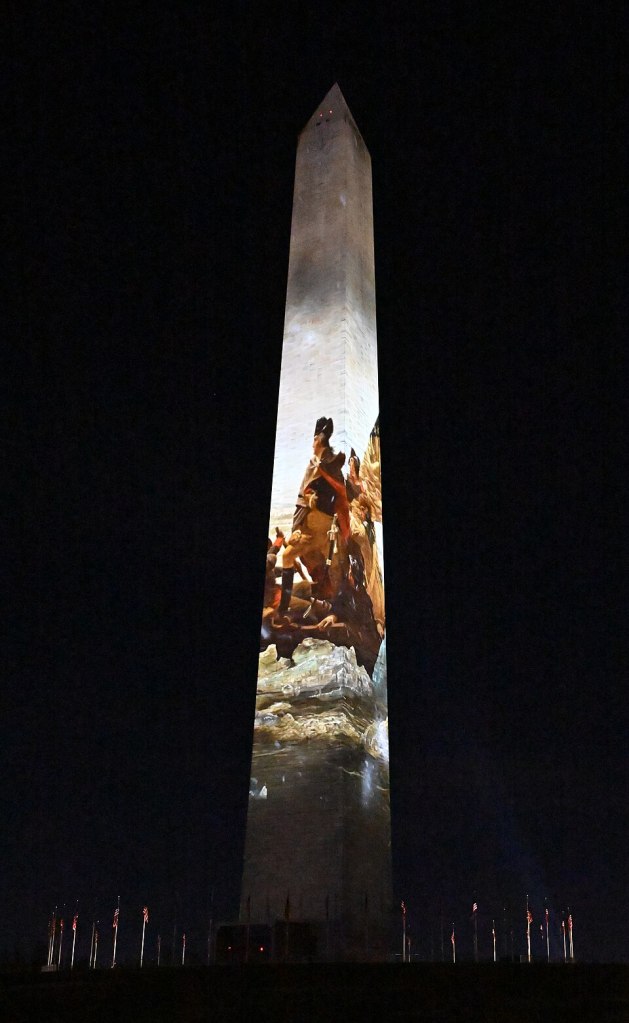
It was Benjamin Franklin, the great statesman, inventor, and wise philosopher who taught us to live our lives in an enjoyable but meaningful way: “Either write something worth reading or do something worth writing,” he said. 3
Thomas Jefferson, author of The Declaration of Independence and our third President, stressed the importance and necessity of being honest when he said, “Honesty is the first chapter in the book of wisdom.”4
And General George Washington, our first President, taught us about doing right and acting in good faith when he said, “Labor to keep alive in your breast that little spark of celestial fire called conscience.”5
Alexander Hamilton, military officer and statesman, echoed Washington when he spoke of always making good on our promises: “A promise must never be broken,” he said.6
As we personally, as well as together as Americans, move forward, let us forever honor the Founding Fathers and American revolutionary heroes by committing to making a positive difference, being honest and having a good conscience, and keeping our promises. Add to that treating others fairly without malice and we are well on our way to a bright future. As it has always been in America and always will be, it’s up to us.
Happy 250th Birthday, America!
REMEMBER
◊ Founding Father and our second President John Adams said, “Let us tenderly and kindly cherish, therefore, the means of knowledge. Let us dare to read, think, speak, and write.”7 Our sixth President John Quincy Adams said, “It is of no use to discover our faults and infirmities unless the discovery prompts us to amendment.”8
◊ After writing The Declaration of Independence and before serving as our third President, Thomas Jefferson served from 1790 to 1793 as the first United States Secretary of State. He believed that domestic policy is tied closely to foreign policy and his approach shaped today’s U.S. Department of State.
◊ Visit www.davidajolley.com for additional blog posts, other interesting content, and updates on future book releases and appearances. Thank you.
- Bates, Katharine Lee, “America The Beautiful,” 1893 (finalized in 1911), Public domain. ↩︎
- Bates, Katharine Lee ↩︎
- Franklin, Benjamin; BrainyQuote, www.brainyquote.com/authors/benjamin-franklin-quotes ↩︎
- Jefferson, Thomas, BrainyQuote, www.brainyquote.com/authors/thomas-jefferson-quotes ↩︎
- Washington, George, BrainyQuote, www.brainyquote.com/authors/george-washington-quotes ↩︎
- Hamilton, Alexander, BrainyQuote, www.brainyquote.com/authors/alexander-hamilton-quotes ↩︎
- Adams, John, BrainyQuote, www.brainyquote/com/authors/john-adams-quotes ↩︎
- Adams, John Quincy, BrainyQuote, www.brainyquote.com/authors/john-quincy-adams-quotes ↩︎


Leave a Reply