Transcript Abstracts
AUGUST 22, 2026 – MESSAGE – THE IMPORTANCE OF SELF-RESPECT
Hello, Everyone. It is my pleasure to be here today and to speak to you. I’ve been asked to talk about self-respect – and its importance in your everyday life.
I was thinking about this talk while casually thumbing through a Signals Mail-Order Catalog and I came across a wall plaque that read: “How cool is it that the same God who created mountains and oceans and galaxies thought the world needed one of you, too.”

I love that message. It is so profound – and best of all it is true. Think about it. In the vastness of the Universe and all of creation, somehow we each made it here into this existence and onto this earth. Amazing, right!
Everyone here is one of a kind. Even if we have some identical twins in the audience who appear to be exactly the same. In some way or another…you aren’t.
We are all individuals and the world needs every one of us. We may not know why, but hopefully somewhere along the way it will become clear.
That’s the first lesson. We are all unique in some way…be it different talents and abilities, the roles we play in our personal and professional lives, or the example we each set.
So, anyway, I was smiling – thrilled that I’d found something to include in this talk – and from a mail-order catalog of all places. I should have shut the catalog and moved on, but I just had to turn the page.
That’s where I came across a t-shirt that reads: “Bigfoot saw me, but nobody believes him.”
So much for the credibility of my source material, right? Oh well, let’s just pretend we never saw the Bigfoot shirt. Hopefully my additional sources will help restore my credibility.
How about Danica McKellar, who in her younger days appeared as Winnie on The Wonder Years television program? Turns out that this child star grew up to be an accomplished and expert mathematician. So, like the character she played, she really is the smart one.
Here’s what she had to say: “Find your self-respect now. Don’t dumb yourselves down. Think of yourself as capable and worthy of finding <someone> who is going to respect you, too. It’s so important…and the confidence you get from feeling smart and tackling something like mathematics, which is a challenge, right? Math is hard.”
So there is our second lesson about self-respect. Each one of us is capable and worthy – and it is important that we surround ourselves with people who respect us as we respect them. Look at Danica. She excelled in the arts as an actress; and then she excelled in mathematics – about as far from acting as she could be.
The old baseball player, Rabbit Maranville, played in the early 1900s when baseball was rough and tumble – hard-nosed – and it took plenty of courage to play the game. Players never knew when the next pitch would be thrown at their head, or when baserunners would wield their metal spikes when sliding into bases or home plate.
Here is what Rabbit Maranville had to say: “For a quarter of a century, I’ve been playing baseball for pay. It has been pretty good pay, most of the time. The work has been hard, but what of it? It’s been risky. I’ve broken both my legs. I’ve sprained everything I’ve got between my ankles and my disposition. I’ve dislocated my joints and fractured my pride…I’ve lost a lot of teeth and square yards of hide. But I’ve never lost my self-respect, and I’ve kept what I find in few men of my age…my enthusiasm.”
There’s lesson three. Always act in a way that will enable you to maintain your self-respect. Maintain your enthusiasm for what you are doing and who you are, too, because being joyful and enthusiastic – despite hardships, setbacks, or challenges – will feed your self-respect.
Do we have any Clint Eastwood fans here? I know I’m a fan of this great actor and director. I have been ever since I saw the original Dirty Harry movie when I was about 16-years-old – officially too young to get into the theater because of the movie’s rating. But I managed to sneak in with a group of about eight people.
We think of Clint Eastwood as the brash, hard character type. But listen to what he said: “Respect your efforts, respect yourself. Self-respect leads to self-discipline. When you have both firmly under your belt, that’s real power.”
Lesson four, then, is so important to remember. Self-respect and self-discipline go hand in hand. When faced with making a choice between two courses of action – one that is right and just, or another that cuts corners and is questionable or contrary to your ethical beliefs – you must have the self-discipline to choose wisely.
Short-term rewards gained in the incorrect manner will do damage to your self-image and self-respect. So they simply are not worth it.
Theodore Parker, the pastor and theologian whose words inspired both Abraham Lincoln and Martin Luther King, Junior, said: “Never violate the sacredness of your individual self-respect.” Which further proves the need to maintain self-discipline.
For our fifth lesson about the importance of self-respect, let’s look at quotes about this very topic by people who talked the talk but failed to walk the walk.
The late musician and singer Kurt Cobain said: “Drugs are a waste of time. They destroy your memory and your self-respect and everything that goes along with your self-esteem. They’re no good at all.”
He was certainly correct in what he said about how dangerous drugs are and how they destroy lives every day. But he suffered from addiction and that led to him committing suicide.
Lesson five is don’t discount the inspiration from sources because you believe they failed in one way or another.
On the one hand, Cobain was credible because he knew first-hand how terrible drug addiction is. And yet it led to his demise. Perhaps he had no self-respect left at the point where he sadly chose to take his life.
It is a shame that he could not maintain long-term recovery. We will never know what additional great music he could have created and shared had he lived a longer, more meaningful, and fulfilling life.
There are teachers everywhere. Look for the lessons you can learn from everyone.
The writer, speaker, and pastor John C. Maxwell offers us a caution we can end with here today – and one we all must forever remember. There is a huge difference between having self-respect and being arrogant.
Listen carefully to what he said: “There are two kinds of pride, both good and bad. ‘Good Pride’ represents our dignity and self-respect. ‘Bad Pride’ is the deadly sin of superiority that reeks of conceit and arrogance.”
Amen to that. We are all unique and able to act in ways that are worthy of our self-respect. That does not mean we are better than anyone else.
In agreement with Maxwell, Mahatma Gandhi said, “Self-respect knows no considerations.”
You cannot truly have self-respect while being egotistical, arrogant, conceited, or taking any actions that are detrimental to other people.
Your self-respect is an ongoing endeavor that you work at day and night, day and night, for your entire life. It must always be maintained and enhanced – and that is your personal responsibility.
Act in ways that make others smile, make them appreciate you and your efforts. Remember, treating others with respect is the foundation of your self-respect. And that will pay huge dividends to you always.
Thank you. It has been my pleasure to talk with you and – hopefully share some thoughts you can take with you in all that you do.
I’m open to hearing your thoughts, questions, and interactions.
###
June 5, 2026 – MESSAGE – MEMORABLE AND EFFECTIVE PRESIDENTIAL COMMUNICATORS
Hello, Everyone. It is my pleasure to be here today and to speak to you. I’ve been asked to talk about American Presidents who were great communicators. The “great communicator” title is often bestowed on Ronald Reagan, but today we will discuss a handful of our country’s Chief Executives.
This is a talk that is intended for everyone. It is not political, so people from all political beliefs can benefit from it and hopefully even enjoy it. And if anyone learns anything from it – all the better.
I am going to share some of presidential quotes by both Republicans and Democrats that resonate the most with me. Some will express thoughts on government itself, but not on political parties themselves.
Okay? With that important caveat, let’s begin.
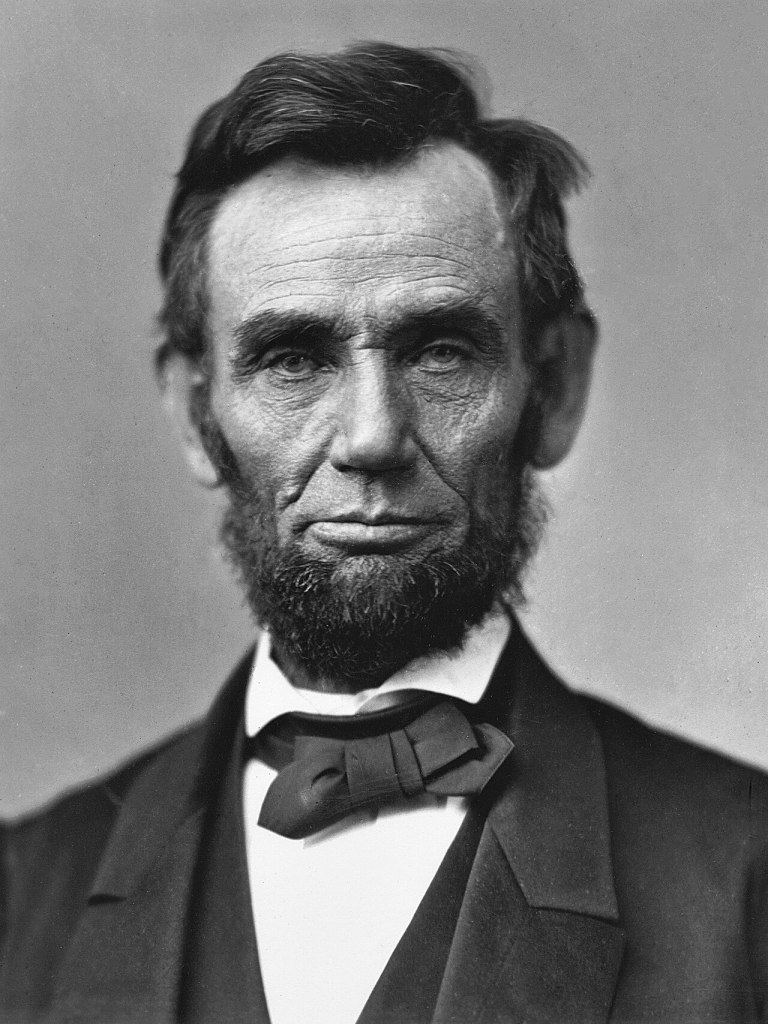
As I look at the American Presidency, a handful of those who have held that important office stand out above the others as excellent communicators. There was Abraham Lincoln, of course, and we need look no further than his Gettysburg Address for proof of his expertise as a communicator.
We all learned his words: “Four score and seven years ago our fathers brought forth on this continent, a new nation, conceived in Liberty, and dedicated to the proposition that all men are created equal.”
I am often asked for advice and assistance when someone is charged with making a speech. I tell everyone to take the lesson learned from Abraham Lincoln to heart. My joke is to tell them to make sure they say “four score,” because it impresses people.
But there are important pieces of advice behind the little joke.
The Gettysburg Address consists of only 272 words, yet the words President Lincoln spoke live on to this day and remain relevant, precise, eloquent, reverent, and inspiring.
If you can achieve even one or two of those descriptors you have indeed succeeded.
President Lincoln spoke for only a few minutes at Gettysburg – in stark contrast to the two-hour speech delivered by the main speaker, the American statesman and orator, Edward Everett.
President Lincoln was effective because he didn’t waste words. He got right to the point, communicated it clearly, and sat down. That’s great advice.
My favorite Lincoln quote, though, says something never to forget about proper planning and being prepared. “Give me six hours to chop down a tree,” Lincoln said, “and I will spend the first four sharpening the axe.”
He also taught something everyone should remember and follow, especially if you want to be a great communicator. “No man has a good enough memory to be a successful liar,” Lincoln observed.
There is nothing as necessary and important as always telling the truth. Yes, I know that seems like an oxy-moron when we are talking about politicians. Be that as it may, remember this in all that you do and all that you say:
The truth shall set you free!
President Franklin D. Roosevelt was an accomplished orator. He knew how to connect with his audiences, and his Fireside Chats presented between 1933 and 1944 were designed so Americans listening on the radio at home felt FDR was speaking directly to them.
He famously intoned, “The only thing we have to fear is fear itself.” And a personal favorite of mine is when he said, “The only limit to our realization of tomorrow will be our doubts of today” and “There are many ways of going forward, but only one way of standing still.”
That is powerful communication. Inspirational. Strong. Decisive.
President John F. Kennedy also excelled with communication. He set the tone for expert oratory with his inaugural address in 1961 when he famously said, “My fellow Americans, ask not what your country can do for you; ask what you can do for your country!”
That is great speechwriting – but we will save that for another day. JFK also delivered it effectively and dramatically.
My favorite JFK quotes include: “Those who dare to fail miserably can achieve greatly,”… “Let us never negotiate out of fear; but let us never fear to negotiate,” … “A man may die, nations may rise and fall, but an idea lives on,” … and, “My brother Bob (that would be Robert F. Kennedy) doesn’t want to be in government; he promised Dad he’d go straight.”
Not sure how much he meant that last one, but it shows how he used humor as part of his communication style. And humor – used correctly – is powerful and memorable…and sometimes actually humorous.
Ronald Reagan often used humor to make a point. When talking about dishonesty in politics and its cut-throat nature, President Reagan noted, “It has been said that politics in the second oldest profession. I have learned that it bears a striking resemblance to the first.”
Funny, yes. And from where I stand, unfortunately also quite accurate.
Ronald Reagan stood tall at the Berlin Wall and put the onus and pressure on the Soviet leader to do the right thing when he famously proclaimed, “Mr. Gorbachev, tear down this wall!”
That is great use of emotion, public opinion, and positioning in communication. And, as we all know, the Berlin Wall did finally come tumbling down.
What did President Reagan do when the issue of his advanced age was brought up during his presidential campaigns? He addressed it head-on. And he turned the tables on his Democratic challenger by saying he would not make Michael Dukakis’s lack of experience an issue.
“Thomas Jefferson once said, ‘We should never judge a president by his age, only by his works,’” President Reagan told everyone. “And ever since he told me that, I stopped worrying.”
Brilliant positioning and taking control of the situation. And he got a laugh at the same time.
It was difficult to select just a few of Reagan’s quotes. So I decided to go with these…
On America being a country based on God and freedom of religion:
“If we ever forget that we are One Nation Under God, then we will be a nation gone under…. We are never defeated unless we give up on God.”
On government’s overreach and the need for smaller government:
“Government’s view of the economy could be summed up in a few short phrases: If it moves, tax it. If it keeps moving, regulate it. And if it stops moving, subsidize it…. No government ever voluntarily reduces itself in size. Government programs, once launched, never disappear. Actually, a government bureau is the nearest thing to eternal life we’ll ever see on this earth!”
On government’s history of being ineffective and over-regulated:
“The most terrifying words in the English language are: I’m from the government and I’m here to help.”
On the failure of communism:
“How do you tell a communist? Well, it’s someone who reads Marx and Lenin. And how do you tell an anti-communist? It’s someone who understands Marx and Lenin.”
And on encouraging people to be brave:
“Heroes are not braver than anyone else. They’re just braver five minutes longer.”
Now, with all that I’ve shared so far, there is one important caveat we must note and remember. And as a writer myself, it is something that is dear to me since I have scripted statements, presentations, and speeches for executives for 45 years….That is a long time.
Presidents have speech writers who put the great wording together and offer up the memorable phrases and statements. The person making the speech will put his or her own touch on it, of course, but professional writers – for the most part – do the heavy lifting.
That said, Abraham Lincoln did not write the Gettysburg Address on the train ride from Washington DC to Pennsylvania. He spent months writing and rewriting his comments.
For that, I give him a double thumbs-up.
In your professional and personal lives, always be cognizant of the importance of being an effective communicator. Use language the other person will understand. Make sure you are heard and understood – in a polite way, naturally. And be an active listener who pays attention to what the other person is saying, does not interrupt, and does not think about replying until hearing the other person’s complete message.
Be brief. Be complete. Be honest. Be memorable. And be back in your seat before your audience begins looking for the best way to escape.
Thank you again for the opportunity to talk with you today. It has been my pleasure.
I am happy to take some questions as time allows.
<Questions and Answers>
<Following Q&A Session:>
It has been my pleasure to be with you today, and I look forward to seeing you again. Check out my website at www.davidajolley.com for more content.
Thank you.
###
May 25th, 2026 – MESSAGE – WE’RE NUMBER ONE! – The Apostle Peter
Hello, Everyone. It is my pleasure to be here today and to speak to you. I’ve been asked to talk about the seventh Sunday of Easter based upon the First Epistle of Peter, Chapter 4, Verses 12 through 14, and Chapter 5, Verses 6 through 11.
The First Epistle of Peter is a book in the New Testament of the Holy Bible. The author is self-identified as Peter the Apostle. That said, many biblical scholars believe the epistle is an expression of the Christian tradition in Rome at that time and is associated with Peter rather than being written directly by him.
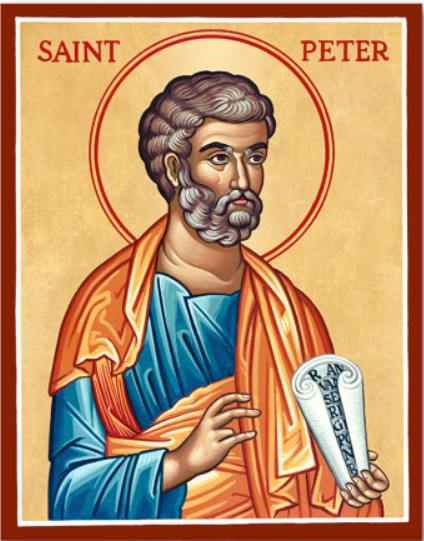
Either way, let’s hear this scripture reading from Peter:
First Peter 4:12-14; 5:6-11
4:12 – Beloved, do not be surprised at the fiery ordeal that is taking place among you to test you, as though something strange were happening to you.
4:13 – But rejoice insofar as you are sharing Christ’s sufferings, so that you may also be glad and shout for joy when his glory is revealed.
4:14 – If you are reviled for the name of Christ, you are blessed, because the spirit of glory, which is the Spirit of God, is resting on you.
5:6 – Humble yourselves, therefore, under the mighty hand of God, so that he may exalt you in due time.
5:7 – Cast all your anxiety on him, because he cares for you.
5:8 – Discipline yourselves, keep alert. Like a roaring lion your adversary the devil prowls around, looking for someone to devour
5:9 – Resist him, steadfast in your faith, for you know that your brothers and sisters in all the world are undergoing the same kinds of suffering.
5:10 – And after you have suffered for a little while, the God of all grace, who has called you to his eternal glory in Christ, will himself restore, support, strengthen, and establish you.
5:11 – To him be the power forever and ever.
If we needed to have some physical prop to highlight today’s message – I guess one of those large, foam, number one fingers would be as good as any.
We’ve all seen them. In fact, I often sit behind some youngster who holds the huge foam finger upward and waves it back and forth throughout the game – blocking my view of the players and the action, but clearly communicating the youngster’s feeling about who is number one.
And while that is, indeed, the title of today’s message, the meaning is a little bit different. It isn’t about one person or group winning and another losing. In today’s example, I am referring to the fact that we believers – The Family of God – are all together one – one body in Christ.
What He can do for one of us, he can do for all. And what He can do for all may be perhaps a bit more meaningful for particular individuals facing a personal crisis.
Medical researchers have not yet found the cure for certain diseases – such as various cancers or neurologic diseases – yet God can and does heal and make whole certain people afflicted with those catastrophic diagnoses.
I have heard doctors tell stories about patients with basically zero chance of getting better who amazingly walk out of the hospital healthy and whole. The doctors shake their heads, knowing the healing was a miracle from above. They have no other explanation for it, other than saying it was a gift from God.
The Haitian Statesman Jean-Bertrand Aristide, who also was a priest, observed that, “If one suffers, we all suffer. Togetherness is strength. Courage.”
If you take the time to read Aristide’s bio, you will see that he was elected as president of Haiti but went into exile during a military coup. He returned to office and organized free elections. In 1996, he became the first elected president of Haiti to peacefully transfer the power of the government to an elected successor.
Incredibly, he was later elected president once again – and once again ousted in a second military coup. We are not here today for a history lesson, but I want to provide context so you can appreciate his quote about togetherness.
It like when a football coach or a baseball manager says, “We win as a team and we lose as a team.”
No one individual takes the credit; nor does one person take the blame. In The Three Musketeers, Alexandre Dumas gave us the famous line, “All for one and one for all; united we stand, divided we fall!”
The South African leader Desmond Tutu said it like this: “God’s dream is that you and I and all of us will realize that we are family, that we are made for togetherness, for goodness, and for compassion.”
Take a few minutes this week to read Desmond Tutu’s bio and you will see that he, too, knows very well what he is talking about. Like the Apostle Peter and Haiti’s Aristide, Tutu was also in the thick of things in his country during his lifetime.
There is strength in numbers, of course. And there are many well-known numbers throughout scripture. For our purposes today, I chose the number 40, which appears 158 times in the King James Version of The Bible. Here are a few examples.
- In the story of Noah’s flood and the building of the ark, Genesis (7:4) tells us that rain fell for 40 days and 40 nights.
- In Exodus (24:18) we read that Moses fasted on Mount Sinai for 40 days and nights.
- In Numbers (14:34) we learn the Israelites wandered for 40 years before finally entering the Promised Land.
- At the beginning of his ministry, we read in Matthew (4:2), Jesus spent 40 days fasting in the wilderness.
- Jonah warned Ninevah for 40 days (Jonah 3:4) and Goliath mocked Israel for 40 days (First Samuel 17:16).
- After His resurrection, Jesus appeared to his disciples for 40 days before ascending to heaven (Acts 1:3).
And that is where we find ourselves on this Seventh Sunday of Easter. It is all about unity. Jesus prays to the Father above “so that they may be one.”
Everyone in God’s family are to be as close as Jesus and God. We are individuals and that will not change. Differences after all make the group what it is. How we handle our differences, though, makes the group all that it can be.
Jesus is asking the Father to guide us – praying that we understand and acknowledge our need for one another; that we are somehow incomplete apart.
It all comes back to what we stated earlier today in the Call to Worship. Remember? The people said, “Through Christ, we are made one with God.”
In the Bible, the number one is a symbol of the singular nature of God. Genesis 1:1 is clear: “In the beginning, God created the heavens and the earth.” It is also a symbol of unity of believers: “One body and one Spirit…one Lord, one faith, one baptism, one God and Father of all.” (Ephesians 4:4-6)
Jesus said, “I and the Father are one.” (John 10:30) And you and I are one among the believers – the body of God. So be sure to say aloud, “We’re number one!” In this case, we really mean it.
Thank you.
###
December 13th, 2025 – MESSAGE – JOY TO THE WORLD – GOSPEL OF SAINT LUKE
Hello, Everyone. It is my pleasure to be here today and to speak to you. I’ve been asked to talk about the third Sunday in Advent based upon the Gospel of Saint Luke. Chapter 1:46-55. So let’s begin by hearing the words from Luke…
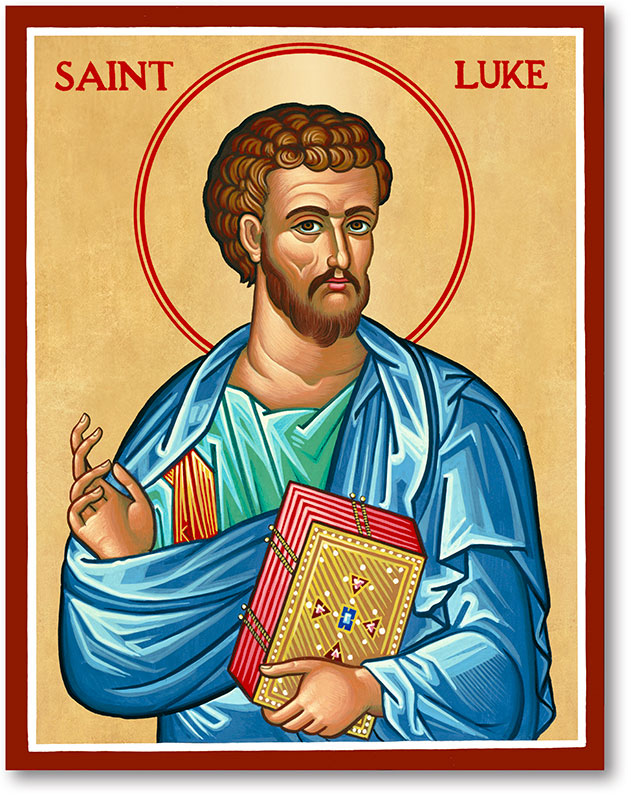
1:46 – “My soul magnifies the Lord,
1:47 – and my spirit rejoices in God, my Savior,
1:48 – for He has looked with favor on the lowly servant. Surely, from now on all generations will call me blessed,
1:49 – for the Mighty One has done great things for me, and holy is His name;
1:50 – indeed, His mercy is for those who fear (revere) Him from generation to generation.
1:51 – He has shown strength with His arm; He has scattered the proud in the imagination of their hearts.
1:52 – He has brought down the powerful from their thrones and lifted up the lowly;
1:53 – He has filled the hungry with good things and sent the rich away empty.
1:54 – He has come to the aid of His child, Israel, in remembrance of His mercy,
1:55 – according to the promise He made to our ancestors, to Abraham and to his descendants forever.”
This is the word of God for the people of God. Thanks be to God.
Today is the third Sunday of Advent, known as Gaudete Sunday. Gaudete is Latin for Joy, and today we light the advent candle representing Joy, joyfulness, and the promise of God – which we know and believe will be fulfilled.
Chapter One of the Gospel of Saint Luke tells us, “My soul magnifies the Lord, and my spirit rejoices in God, my Savior.”
We are bursting with Joy because we know we are just weeks away from the arrival of the Christ Child. Luke assures us this is so, and we – the people – are excited.
At the same time, we are typically busy this time of year – well, extremely busy – not only preparing for the King, but also in everything else that goes along with celebrating Christmas.
The shopping. The wrapping. The decorating. Displaying the Nativity Scene and putting the ornaments on the tree. And of course, the baking and cooking, going to church and holiday programs. Visiting with family and friends. It makes one tired just thinking about it. It is all wonderful, yes, but requires a nap from time to time.
The accomplished Indian poet Rabindranath Tagore, whose life spanned from 1861 to 1941, put it so well when he wrote: “I slept and dreamed that life was joy. I awoke and saw that life was service. I acted and behold – service was joy.”
And the great British writer – a Christian writer – C.S. Lewis, observed that “Joy is the serious business of Heaven.”
As believers and followers, it is in our DNA, so to speak, to live joyful lives of service. That is how we honor Jesus and thank Him for the greatest gift of service the world has ever known – His sacrifice to pay for our sins.
Advent is all about waiting and preparing. We await and prepare for Christmas – Jesus’ birthday celebration – but we also await and prepare for His return one day. Get ready for the second coming.
That is what Isaac Watts was telling us in his beautiful hymn, Joy to the World. Considered “the father of English hymns,” Watts was born in South Hampton, England, in 1674 and had a born talent for rhyme.
The story goes that he spoke in rhyme most of the time beginning when he was “just a wee lad” as they say in England.
When his father asked one day why the young Isaac had opened his eyes during the family prayer, Watts is said to have replied, “A little mouse for want of stairs, ran up a rope to say its prayers.”
Not impressed, his father proceeded to punish him – to which young Isaac replied, “O father, father, pity take, and I will no more verses make.”
Has anyone ever made a promise knowing full well it was something that could not be done? Isaac, of course, could not keep that promise, continued as a poet, and went on to become the pastor of a large church in London.
Watts, who passed away in 1748, wrote Joy to the World in 1719, one of several poems based on the Psalms – in this particular instance, Psalm 98, which is about the second coming of Christ.
It wasn’t until a century later that Lowell Mason, a music teacher in Boston, set the poem to music. The hymn was released during this time of the year and soon became a Christmas favorite.
We often sing the first line incorrectly – “Joy to the world, the Lord has come” – while Watts actually wrote “Joy to the world, the Lord is come.” He wasn’t writing about Christ’s birth – the past – rather, he was writing about the future and the return of Jesus.
While not technically a Christmas poem or hymn, Joy to the World is about anticipation, hope, and great joy. So, then, it turns out it actually remains perfect for advent and Christmas. At the same time, there is no reason why we cannot sing Joy to the World at any time during the year.
Psalm 98 reads in part: 98:4 – “Make a joyful noise to the Lord, all the earth; break forth into joyous song and sing praises! 98:7-9 – Let the sea roar and all that fills it; the world and those who dwell in it! Let the rivers clap their hands; let the hills sing for joy together before the Lord, for He comes to judge the earth. He will judge the world with righteousness, and the peoples with equity.”
Whether it was awaiting the birth of Jesus or Christ’s return – and yes, even the little ones awaiting the visit by Saint Nicholas, the late, great Tom Petty was right when he sang, “The waiting is the hardest part.”
From the Book of Isaiah, we learn of God’s promise that what is wrong will be corrected, what is broken will be made whole, and what is scattered will be gathered up again. This Old Testament book foreshadows what is to come. From Isaiah 7:14: “Behold, the virgin shall conceive and bear a son, and shall call his name Immanuel.”
And, thus, the awaiting and preparation had begun. Just as we work our way through advent and the birth of the Christ Child.
So make a joyful noise. Christmas will soon be here. Amen.
###
August 10, 2025 – Messages on the Words of Great Writers – The Book of Hebrews (Unknown Author) – Desire A Better World

In this message, Dave talks about a reading from the eleventh chapter in The Book of Hebrews that focuses on the faith of Abraham, Sara, and the Hebrew people. He talks about the verse 11:1 that reads, “Now faith is the substance of things hoped for, the evidence of things not seen,” and the people’s desire for and belief in God’s promise of heaven. Rather than the desire for more material things, this talk is about place – wanting a better place to be, a better world. Dave talks about having faith even while experiencing the ups and downs common to life. He quotes the Apostle Paul and emphasizes that the promise of heaven is there for us. We just have to do our part to make things better along our paths to our ultimate destination.
###
August 3, 2025 – Messages on the Words of Great Writers – Saint Luke – Set Your Mind on God

In this talk, Dave discusses the need for us to set our minds on God so that the thoughts we think and the actions we take in our daily lives are done mindfully and for good purposes. He shares the fallacy of thinking that material things are the key to happiness and fulfillment and – as he typically does – uses relatable examples to help audiences understand the message. Rather than compiling or buying more and more things, when we set our minds on the things of God, we are being useful not just to ourselves, but to others, too. Dave shares that we can and will find joy in setting our minds on things that are above.
###
April 8, 2025 – It’s a new Baseball Season

In this baseball talk, Dave shares information on the early season results and the hot topic of the day – torpedo bats. In addition, he shares information on players who are close to setting personal records during the 2025 season (and whether or not they will attain them). He rounds out his talk with discussing the baseball records that are the most difficult to break, this year’s Hall of Fame class, and gratitude that Dick Allen and Dave Parker are finally being enshrined in Cooperstown. As is his custom, he closes the presentation with a trivia quiz. Dave shows it is always a good time to talk about baseball.
###
August 25, 2024 – Messages on the Words of Great Writers – The Apostle Paul – Put on The Armor of God
The Book of Ephesians – Apostle Paul’s letter to the Ephesian people – details the armor of God, the complete protection God provides for people to resist and be safe from evil. Apostle Paul was a prolific writer, responsible for a considerable percentage of the Bible’s New Testament, and he uses the metaphor of a Roman’s soldier’s suit of armor to make people aware of how they are protected by truth, righteousness, preparation, peace, faith, and salvation. As he generally does, Dave includes a modern-day story to emphasize the importance of having hope when challenges come your way.
###
August 18, 2024 – Messages on the Words of Great Writers – Prophet Jeremiah – The Wisdom of Solomon

In this talk, Dave discusses King Solomon’s Prayer for Wisdom. In this passage, God appears to Solomon in a dream and said to him, “Ask what I should give you.” Imagine being asked such a question and think about how you would answer. Most people might ask for great wealth or other riches. The wisdom of Solomon shines through, however, as he asks for the ability to lead the people of Israel fairly and justly, as is written in The Book of First Kings, 3:9: “Give your servant, therefore, an understanding mind to govern your people, able to discern between good and evil, for who can govern this great people of yours.” Dave shares a story from the great comedy show Seinfeld to illustrate the wisdom of Solomon in a memorable way.
###
April 14, 2024 – Messages on the Words of Great Writers – The Acts of the Apostles – The Gospel of Saint Luke – Act Like an Apostle
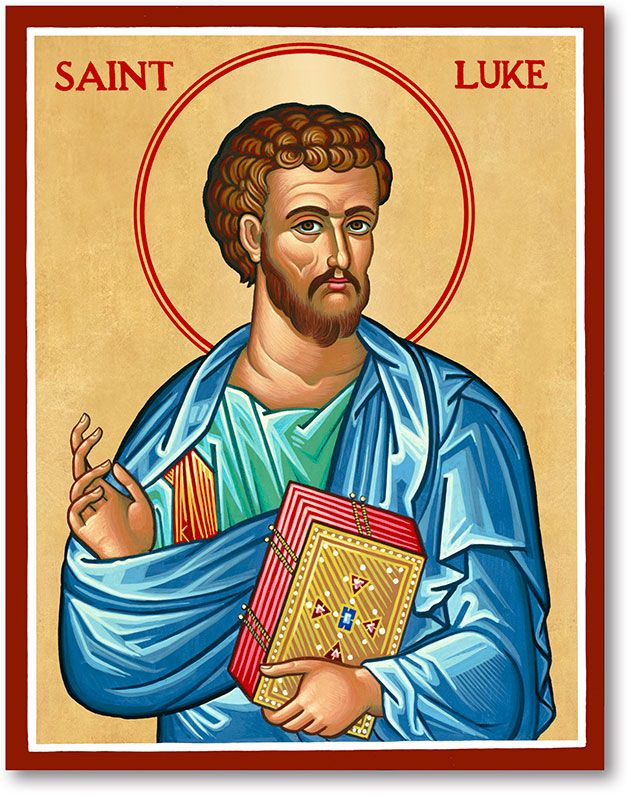
In this talk, Dave focuses on the acts of the apostles when they were charged with going out into the world and doing good works and spreading the word of God. He takes it a step further by talking about the good works – good deeds – of everyday people. Learn how even small acts of kindness, small acts of doing good, lead to success. You, too, can make a positive difference for yourself and others. All you need to do is act like an apostle.
###
December 12, 2023 – Nine Weeks to Pitchers & Catchers – Talking Baseball in December
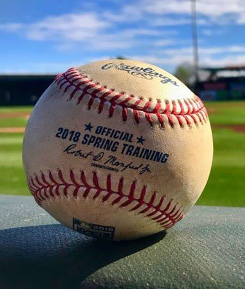
You wouldn’t think too much happens in the world of baseball during December, but history shows that it does. In this presentation before a Northeastern Pennsylvania audience, Dave shared some baseball history on this calendar date, including information on an old-time Pennsylvania player, rules changes, hall of fame players, free agents, and a baseball trivia quiz.
###
September 26, 2023 – Eight Tips for Effective Media Interviews and Public Speaking

In this presentation, Dave helps business leaders learn how best to approach public speaking engagements or media interviews. While one talk is not enough to become an expert speaker – that takes practice and more practice – these eight tips provide a sound foundation for effective communication. Learn the basics that are at the center of all effective communication endeavors.
###
July 23, 2023 – Messages on the Words of Great Writers – The Gospel of Saint Matthew – Stay Out of the Weeds

Are you familiar with The Parable of the Weeds? In this parable, Jesus teaches the importance of sowing good seeds in the earth – but even when you do, be prepared for the presence of weeds among the good crop. In this message on the writing of Saint Matthew, Dave talks about the weeds of life and how best to live as weed-free as possible. He even quotes famous survival expert and writer Bear Grylls in this important message. Learn how to separate the wheat from the weeds to brighten your days and those of the people around you.
###
December 12, 2022 – Baseball Jeopardy – Questions and Answers
See if you know the answers to the clues provided in Dave’s presentation of Baseball Jeopardy. And since the game is played similar to the epic TV gameshow, be sure to give your answers in the form of a question! In this particular presentation, the categories are: Personal Convictions, All in the Family, Other Stages & Other Success, and for Final Jeopardy – No, No, No. Think before you answer – and only after answering take a peek at the answer key.
###
May 9, 2022 – Messages on the Words of Great Writers – The Gospel of Saint John – Love One Another
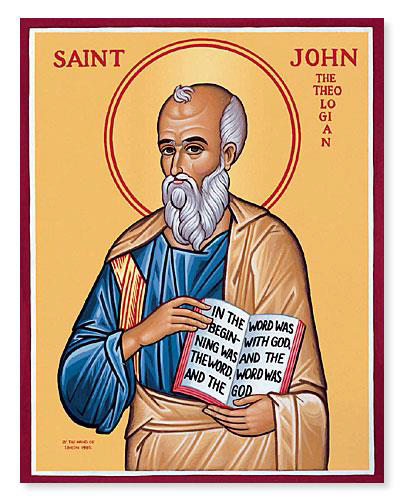
The importance of love is emphasized throughout the Bible and illustrated eloquently in the Gospel of Saint John 13:34-35 where Jesus says, “A new command I give you: Love one another. As I have loved you, so you must love one another. By this everyone will know that you are my disciples if you love one another.” No matter your personal religion or faith, the message of loving one another is universal and perhaps more important now than when the Gospel of Saint John was written. Dave also quotes Mahatma Gandhi, a Hindu, in his talk. Love transcends all beliefs and is paramount to every living soul.
###
April 12, 2020 – Messages on the Words of Great Writers – Lessons of the Tao Te Ching
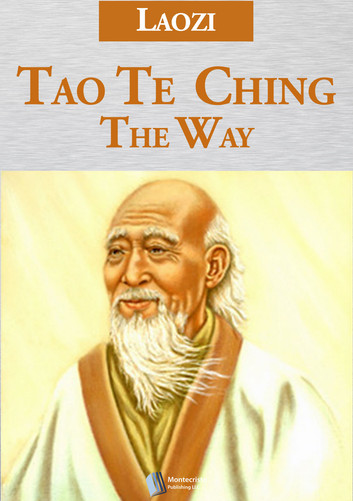
Interested in powerful words of wisdom on how to live in harmony with the universe and being in balance with the natural world around you? Then the Tao Te Ching – Book of the Way – is for you. This material includes all 81 enlightening verses from Lao Tzu’s incredible work, Dave’s notes on each verse, and an area for you to note your own observations and lessons learned. Whether it is advice on letting go, staying out of judgment, trusting your inner calling and acting without fear, or remaining in the present moment, the lessons learned are a profound guide for you to live your best life. The Tao Te Ching is not something you read once and forget about. Rather, its verses are meant to be read and studied again and again, as additional meaning comes from revisiting its words of wisdom.
###


 David A. Jolley - Homepage