In this post, I take a moment to appreciate the many lessons we can learn from nature, including those taught by the incredible migration of the monarch butterfly.
Monarch butterflies are simply amazing. Their wings are paper-thin and seemingly fragile, yet they travel thousands of miles as part of their annual migration. The monarch is the only butterfly that, similar to birds, makes a two-way migration.
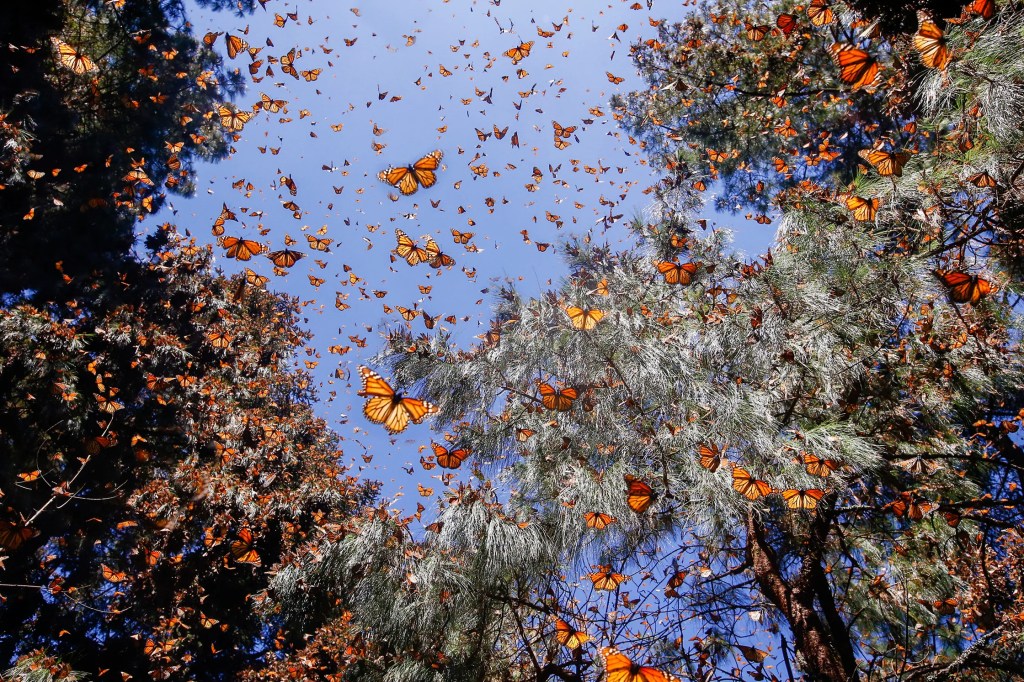
I saw a monarch the other day in my yard. When you watch its crazy back and forth flight, fluttering from here to there and from one shrub to another, it is hard to believe this tiny butterfly could ever travel such long distances.
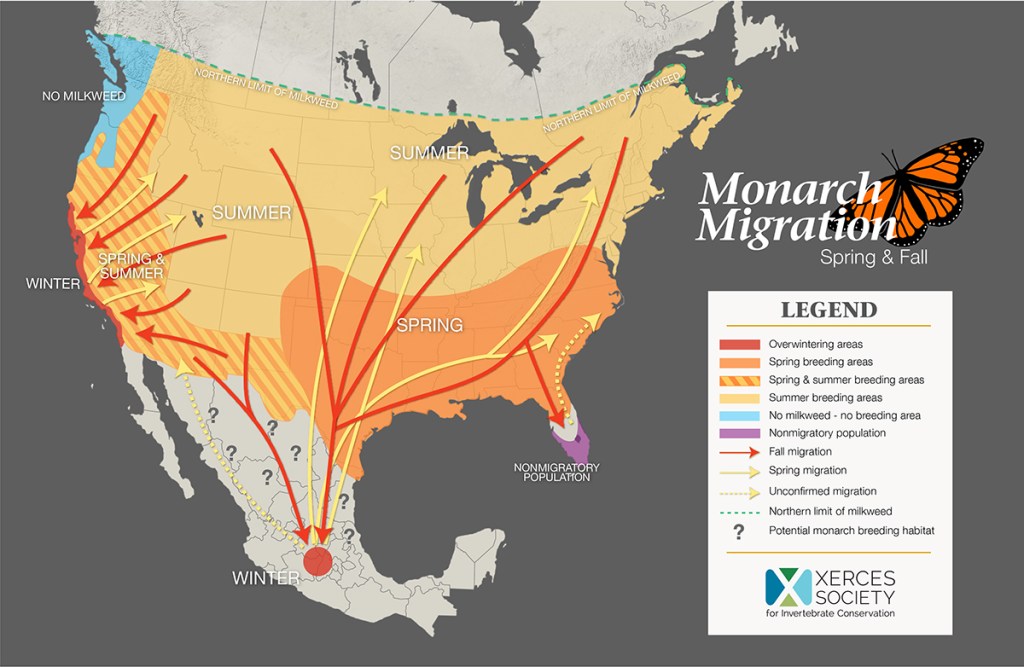
The monarchs I am used to seeing in Pennsylvania fly all the way to Mexico to avoid the cold weather months in North America. Incredibly, they overwinter in the same mountainous areas of Mexico each year – and researchers are not entirely sure how they manage to find their specific locations and destinations.
It is likely a combination of the magnetic pull of the earth, the position of the sun, and other factors. But I like to believe there is some divine influence helping to make it happen.
The monarchs that leave town as autumn arrives in the northeast head down the eastern seaboard of the United States, make a right turn over the gulf states, and then fly south over Texas in order to return to their particular spot in Mexico. To make a similar trip, I’d require a passport, first-class plane tickets with onboard meals and drinks, an in-flight movie, a book or two to read, and of course my luggage.
When they sense the warmer weather returning in the springtime, the monarchs become active again and lay their eggs for a new generation. Then, this new generation makes the journey north – and somehow they know exactly where to go and how to get there. That is so incredible it is hard to even imagine.
Their mind-numbing migration inspired the term, “the butterfly effect.” In chaos theory, this means the sensitivity of even small, seemingly insignificant changes can result in much larger future results. The example often given is that the movement of a butterfly’s wings in one place creates a ripple effect that can lead to strong winds in another faraway place, even as strong as a tornado.
The butterfly effect is also used to explain how small acts of kindness can grow into thousands and thousands of people being kind to others. A teenage boy walks across the floor to ask a girl to dance and years later they are married and have children. Someone picks a piece of trash off the ground and sets an example for others to do the same. Anne Frank, a young Jewish girl hiding from the Nazis during World War Two keeps a diary of her experiences. Years later, her book sells millions of copies in multiple languages world-wide and teaches patience, tolerance, love, and acceptance.
In 1945, baseball executive Branch Rickey signs Jackie Robinson, the first black man to play in the major leagues in many decades, and it leads to the integration of the sport and is seen as key to the beginning of the American civil rights movement. A mother and father teach their young son how to play tennis and he becomes enamored with it. He continues to practice and even serves as a ball boy for professional tennis tournaments. Years later, Roger Federer grows up to be one of the most accomplished tennis champions and all-time greats.
In his book, The Butterfly Effect, Andy Andrews explains, “Every single thing you do matters. You have been created as one of a kind. You have been created to make a difference. You have within you the power to change the world.”1
The Chinese philosopher Lao Tzu was right when he said that long journeys are made by taking one step at a time. If a tiny, miniscule butterfly can flap its paper-thin wings and fly thousands of miles, imagine all you can do. So take that first step; you never know where it might lead.
REMEMBER
◊ The butterfly is a symbol of transformation, rebirth, and change – starting as a caterpillar, then spinning a cocoon, and finally emerging as a beautiful butterfly. Do not fear change, as it can be a springboard to a wonderful transformation. As Wendy Mass explained in The Candymakers, “If nothing ever changed, there would be no such thing as butterflies.”2
◊ “We are like butterflies who flutter for a day and think it is forever,” wrote Carl Sagan in Cosmos.3 American novelist Nathaniel Hawthorne said, “Happiness is a butterfly, which when pursued, is always just beyond your grasp, but which, if you will sit down quietly, may alight upon you.”4
◊ This blog post is an excerpt from Dave’s upcoming book, Take This With You…100 Messages to Accompany You on Your Life Journey, that is currently in the re-writing phase.
◊ Visit www.davidajolley.com for additional blog posts, other interesting content, and updates on future book releases and appearances.
- Andrews, Andy, The Butterfly Effect – How Your Life Matters, ©2010, Thomas Nelson Publishers, Nashville, TN ↩︎
- Mass, Wendy, The Candymakers, ©2011, Little Brown & Company, NY, NY, and Boston, MA ↩︎
- Sagan, Carl, Cosmos, ©2013, Ballantine Books, NY, NY ↩︎
- Hawthorne, Nathaniel, www.brainyquote.com/authors/nathaniel-hawthorne-quotes ↩︎


Leave a Reply