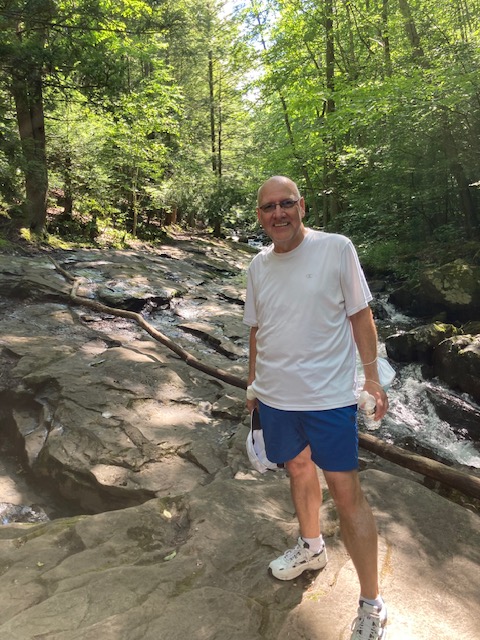
David A. Jolley, APR, (Dave) began writing books at age eight by filling spiral bound notebooks with stories, poems, and drawings. It wasn’t much later that he began producing a simple ‘newspaper’ that his sister, CJ, shared with her co-workers each week.

Nothing thrilled Dave more during his childhood than when he received sports equipment, pens, pencils, paper, and books as presents. There is an old photo of Dave at about age nine sitting at the typewriter working on his next story, as well as those of him playing baseball – his two loves.
He has been consumed by an ongoing interest in the written word as long as he can remember, so it was not surprising that he earned his college degree in English and Communication Studies at Wilkes College in Wilkes-Barre, PA, and enjoyed a more than 45-year career in public relations, public affairs, marketing, issues and crises management, development, professional writing, executive leadership, administration, operations, government and community relations.
Dave is a longtime member of the Public Relations Society of America (PRSA) and earned his accreditation from that organization in the 1990s. He has since been reaccredited every three years. The accreditation’s APR designation signifies excellence in the public relations profession.
He is the author, co-author, ghostwriter, or editor of approximately 20 books, including his 2011 baseball book, A Good Cup of Coffee…Short-Time Major Leaguers & Their Claims to Fame, and two new titles, Take This With You…100 Messages to Accompany You on Your Life Journey, and Especially the Branches, a book of poetic musings, meditations, and observations. Dave also writes a periodic sports column for The Times Leader newspaper in Wilkes-Barre, PA.
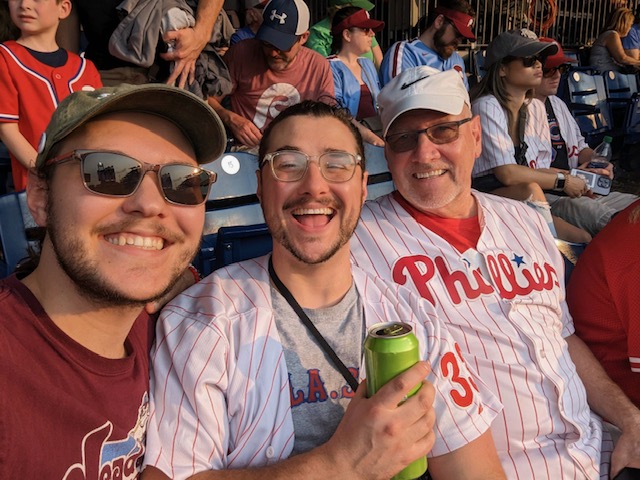
Here are some questions and answers with Dave, so you can get to know him better.
Q: What was the first book you ever wrote?
Dave: My first spiral notebook book was a murder mystery, although very simplistic. The bad guy gets caught when he returns to the scene of the crime. I must have heard somewhere that the guilty parties always return to the place where the crimes occurred. I looked at it not too long ago, and while it is simplistic and funny – written by a young kid – I was already using some descriptive settings and developing characters and their quotes. I must have thought I had a future as a writer! (Laughs).
Q: How about your other early writings?
Dave: I also have a notebook that I wrote about the Philadelphia Phillies and Philadelphia Eagles. I’m a Philadelphia sports fan through and through, and it started at a very young age. My brother, Carl, was a Philadelphia fan, so it was no surprise that I became a fan of the Philly teams, too. Then I did my little newspaper for my sister and her co-workers at what was then the Bell Telephone Company. Just a bunch of things that caught my eye in the real newspaper, the news on television, and things people were discussing. Then, as I got into junior high and high school, I began writing for my school newspapers. I also wrote for my college newspaper and did pieces for my college radio station.
Q: What were your first national publications?
A: I wrote an article for a publication called Bits ‘n Pieces recommending that we have a ‘To Accomplish’ list rather than a ‘To Do’ list. The difference, I suggested, was that focusing on accomplishing something was more positive and productive than simply having to do something. I wrote a piece about a Corvette Club in Central Pennsylvania holding events to benefit the Ronald McDonald House in Danville, PA, that appeared in a magazine for Corvette owners. And I wrote an article that was published in The Baseball Bulletin with the headline, Baseball Trivia’s Hall of Shame. The article was about the flip side of baseball, for example, it told the story of Al Downing, the pitcher who gave up the historic 715th home run of Hank Aaron’s Hall of Fame career. It was about the players who found themselves on the wrong side of baseball history, and it led to an important learning experience.
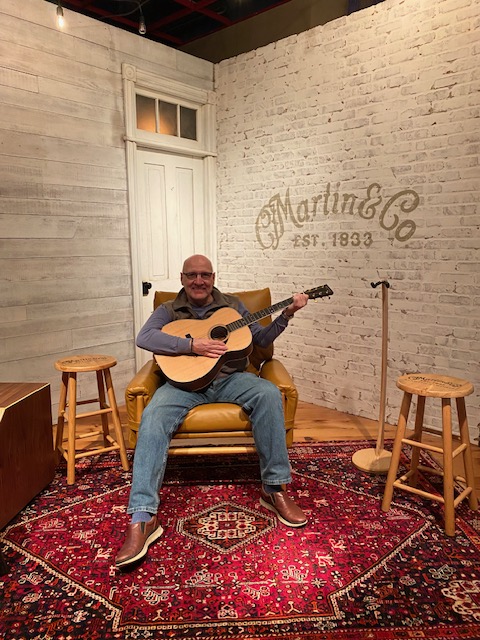
Q: What was the learning experience associated with your baseball trivia article?
A: I was in college when I wrote that article and it gave me the idea that I could find enough such material to turn it into a book. So, while attending classes and working a part-time job, I also began doing this research. I found plenty of material, but it was painstakingly slow to get the book written with everything else I had going on at the time. I’d just completed the manuscript and was contemplating next steps when someone else published a book with the same premise. Their book did so well, that in addition to baseball, the writers did books about the other major sports, too. They turned it into quite an enterprise, so it taught me the importance of striking while the iron is hot. I missed out on benefiting from my original idea as published in The Baseball Bulletin.
Q: Did you go on to work in the media?
Dave: I wrote sports for a now defunct newspaper, The Sunday Independent, in Wilkes-Barre, PA. In those days, you would return from covering a game, sit down at an old typewriter in the newsroom, and draft your story on beige copy paper. If nothing else, I had to learn to write quickly, as the editor was constantly looking over my shoulder and yelling that he needed the copy immediately. There was always a tight deadline. Over the years, I wrote features from time to time, though, my career was in public relations rather than the media. Thousands of my news releases and features were published in various newspapers and other publications, but it wasn’t until I retired from my full time career that I returned to the media – writing a sports column in The Times Leader newspaper in Wilkes-Barre. It is actually a sports column that most often includes a larger, societal, national, or global topic or lesson, for example, the accomplishments of Jackie Robinson and Larry Doby in the context of equality and race relations, pieces about Lou Gehrig and ALS, athletes and mental health, Roberto Clemente’s humanitarian efforts, Jim Valvano’s famous speech at the Espy awards with the announcement of the Jimmy V Foundation, and more. I include some type of message or lesson, without being obvious or preachy.
Q: Do you like to read?
Dave: I love to read, and I keep a journal of all the books I read each year. My high mark was in the Covid year of 2020 when the world shut down and I read 120 books. My average now is about 80 books per year. My best advice is to read, read, and read some more. It makes you think, develops language skills, and enhances your imagination. And if you are a writer, reading is an absolute must.

Q: What kind of books do you read?
Dave: It’s funny, but when I go back and look at the books I’ve read at the end of each year, it typically comes out about even between fiction and non-fiction. I like to read biographies and autobiographies, memoirs, and novels. Recently, I’ve been concentrating on the books of American authors from the 1950s to the 1980s, when these authors were revered as celebrities and were often seen on The Tonight Show. In those days, Johnny Carson’s program was 90 minutes long and included an author’s spot. It was always interesting when Truman Capote, Norman Mailer, Gore Vidal and others appeared. You never knew where the conversation was going to go. When I want to read today’s fiction, I like the books by John Sandford. I’ve always been a Robert B. Parker fan and am pleased that his estate is working with Mike Lupica and another writer to continue producing new titles with his famed characters.
Q: Do you have any book recommendations?
A: Yes, but you’ll have to read my blog and book reviews to get them. (Laughs) I will share with you my two favorite books ever. One is The Boys of Summer by Roger Kahn. It is Kahn’s story about covering the Brooklyn Dodgers as a young reporter for The New York Herald newspaper and then looking the players up decades later to tell more of the stories of their lives. It is a baseball book, yet it is more of a book about life. It is extremely well written with great messages. Well worth the reading time. In fact, I’ve likely read it ten times by now. It was originally set in the days when Jackie Robinson broke the color barrier in the major leagues, so Kahn weaves societal issues into the story.
My other favorite is In Cold Blood by Truman Capote, who liked to tell audiences this book was his entry into a new genre, the non-fiction novel – a story based on true events but with dialog and plot development like you would expect in a novel. While the central story of In Cold Blood is the murder of four members of a well-liked and respected family in Kansas, it paints a picture of who the murdered people were. It makes them human, not just a murder statistic you could read in the newspaper.
At the same time, it deals with the murderers themselves, two men with no direction and living lives of crime. Ultimately, it is about them being captured, convicted in a court of law, and sentenced to death by hanging. Capote found himself between a rock and a hard place. He had developed relationships with the killers over the years, visiting and interviewing them in prison many times. He got to know them as people and in that way felt badly about their upcoming executions. On the other hand, his book could not be completed until the case came to its conclusion and they were hanged. The tension is palpable, the characters well developed, and the murders and executions written about with style, and empathy. What Capote called the non-fiction novel became better known as the new journalism and practiced by Capote, Tom Wolfe, Norman Mailer, and others. So, that writing style may be of interest to you.
Q: Besides reading, what are your other hobbies?
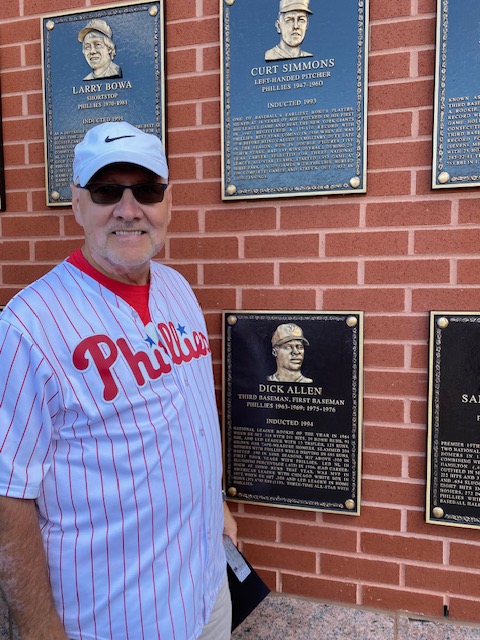
Dave: As I said, I love Philadelphia sports, so I watch the Phillies and the Eagles faithfully. I’ve been a partial season ticket holder with the Phillies for many years, and previously I was a Philadelphia Flyers hockey season ticket holder. I played softball until I was in my mid-forties and many of my teammates were getting injured. So, I decided it was time to retire from playing organized ball. I’ve been a tennis player since my teens, although I haven’t played too much lately. My tennis partners are disappearing from the courts, and many people tell me it’s time to play Pickle Ball. I’m not yet ready to do that. (Laughs). I have two dogs, Mollie and Georgie, that I like to take for walks, and I like to play golf. I also enjoy various styles of music, but my favorites are Elton John, The Beatles and individual stuff by Paul McCartney and George Harrison, Queen, The Rolling Stones, and Tom Petty and The Heartbreakers. As far as TV goes, for the most part I watch sports, old situation comedies, and You Tube.

Q: What is your educational background?
Dave: I started grade school in first grade – no kindergarten in my little hometown in those days – at the Courtdale Elementary School in Courtdale, PA. A new school district was created when I was going to fifth grade that included eight communities on the west side of Pennsylvania’s Wyoming Valley, so I went to fifth grade in the neighboring town of Pringle, sixth grade back in Courtdale, seventh in Luzerne, eighth in Forty Fort, ninth and tenth grades in Plymouth, and my junior and senior years in Kingston. Hurricane Agnes caused extensive flooding in the Wyoming Valley in June of 1972, which affected many of the Wyoming Valley West School District’s buildings. As a result, we had a split schedule for my last two years of high school where juniors and seniors started classes at 7:20 a.m. and finished school each day at 12:20 p.m. The freshmen and sophomores then went to school from 12:30 p.m. until 5:30 p.m. I was so thankful I did not get the afternoon schedule. I graduated from high school on June 11, 1974, and – follow the math – recently attended my 50th high school reunion. Yikes! How did that happen? I majored in English and communication studies at Wilkes College (now University) in Wilkes-Barre, Pennsylvania, graduating on May 21, 1978. My CV includes pages and pages of continuing education.
Q: What was your first job after college?
Dave: I was hired as an account supervisor at Haddon Craftsmen, a book manufacturing company in Scranton, PA. Haddon produced most of the books for the top publishing companies, including Random House, W.W. Norton, Book of the Month Club, Houghton Mifflin, and others. It was a great learning experience. Initially, I learned about the printing industry. They sent me on my first business trip, about 40 miles from my house to Bloomsburg Craftsmen, where we printed the books. I stayed in a hotel for two nights when I easily could have driven home. I learned about the complete book manufacturing process, from setting the type through printing, binding, and distribution. I was hired as a management grade three and was then promoted to a management grade five in Haddon’s distribution center. I always loved the smell of new books in the warehouse. It was then that they sent me to management school, and I had about 100 unionized employees reporting to my boss, Jack, and me. Quite an experience, for sure, that benefited me throughout my career.
Q: What lessons did you take away from your time there?
Dave: Management school paid dividends for the rest of my career, as I always had colleagues reporting to me. I learned about measuring efficiencies, supervising people, book production, and supply chain. But one important thing I learned was some sage advice by my friend and Haddon colleague, Phil Dwyer. Phil knew I wanted to work in public relations, and while parts of my time at Haddon were spent proofing book galleys and some other loosely related endeavors, I did not want to stay there long term. He advised me to use my experience there as a springboard to get into my chosen field, and he also warned me to “not let them (the company’s leaders) trap you here.” I was 23 years old and not quite sure what he meant by being trapped there, but it turns out Phil was right. When I submitted my resignation to take the job at Geisinger, my bosses at Haddon offered me an additional $5,000 raise to stay. That was real money in 1981, especially when you consider that I was already taking a $5,000 decrease in salary to work in public relations at the new hospital. So, it ended up being a $10,000 negative difference. Hard to resist at that time, but Phil taught me to think long term, and leaving Haddon – even for less money – was the correct move. I had a long, productive, and mostly satisfying career at Geisinger, while Haddon Craftsmen ended up closing a few years later. Thank you, Phil, for sharing your insight and wisdom with me.

Q: You spent about 40 years in healthcare leadership. How did that come about?
Dave: While working at Haddon Craftsmen, I took a call one day from a Mr. Dale Hughes, who was the owner and CEO of Hughes Printing Company in East Stroudsburg, PA, and New York City, one of the largest magazine printers in the country. During my initial job search I’d sent a resume to a blind ad, and it turned out to be Hughes Printing. I interviewed with Mr. Hughes, and he offered me a job. The only issue was that I’d only been working at Haddon for a short time, and I didn’t believe it was fair to Haddon to train me in book manufacturing and then for me to leave the company so soon afterward. So, I did what any crazy 23-year-old kid would do. I told Mr. Hughes I could do the work he needed to have done as a consultant. I’m sure he was chuckling inside, but he agreed and that played a role in me moving into the healthcare industry.
While continuing to work full-time at Haddon Craftsmen, I also did media relations, internal communications, advertising, publications, and special events for Hughes for the next 18 months when I learned there was a job opening for an assistant director of public relations at a new hospital that was being built in Plains Township, PA, near Wilkes-Barre. The director of public relations at the hospital was George Pawlush, who’d been my mentor at Wilkes College. My close friend, R. Jon Schaffer, was the art director at an area printing company and worked with George to produce various publications. Jon kept recommending me for the job. George scheduled me for an interview, unaware of all the work I’d been doing for Hughes, so he was impressed when I showed up with an extensive portfolio. George hired me at Geisinger, then left there 18 months later for a new position in Connecticut, and I was promoted to director of public relations before my 26th birthday. I was still in my twenties when I was promoted to vice president, likely the youngest VP in the health system, and I continued my career path with Geisinger until I retired on my 63rd birthday, December 31, 2019. It was a great run with a wide variety of responsibilities, experiences, and accomplishments.
Q: Tell us about your APR accreditation.
Dave: The APR represents my Accreditation in the Public Relations profession. The Public Relations Society of America – PRSA for short – has long led the charge for a high-level, professional accreditation process where members complete a thorough examination of their PR knowledge, experience, and the organization’s code of ethics. I earned this important accreditation about 30 years ago and have been reaccredited every three years since then. I continually advocate for public relations practitioners to join PRSA, continue gaining experience and education, and ultimately pursue their accreditation.
Q: Other than writing that incomplete manuscript while in college, what got you into writing and editing books?
Dave: I’ve always wanted to write books and wrote a few manuscripts over the years that didn’t see the light of day. I have one fiction manuscript that is about 200 pages in length that I wrote into a corner and could find no way out. Maybe I will return to it someday if I’m ever short of other writing endeavors. I was a contributing author for a few history, healthcare, and marketing books and then, in 2011, I published my book, A Good Cup of Coffee…Short-time Major Leaguers and their Claims to Fame. I researched it while my young sons were watching kids’ shows on television, and then wrote the manuscript. Meanwhile, in my career position I was asked to help our CEO, Dr. Glenn Steele, write Reinventing Healthcare, a book about his tenure leading Geisinger. Afterward, we did a second book, ProvenCare, that I ghostwrote with him about the advances in results-driven and patient-centered medicine he inspired and implemented at Geisinger. So, writing books has been an ongoing thing with me for a long, long time.
Q: Why did you self-publish your baseball book?
Dave: I had a publishing company ready to move forward with my book, but the editorial team there wanted me to turn it into more of a research book about every baseball player in history who played in only one major league game. That’s where the term cup of coffee comes from. These players stayed in the major leagues barely long enough to have a cup of coffee. My intent with A Good Cup of Coffee, though, was to keep it a fun, entertaining read, not a reference text. So, I moved forward with telling the stories about the other things in life short-time players did in other sports or professions. I published it on my own and it was successful.

Q: What are your greatest accomplishments to date?
Dave: Well, that’s an easy one, it is being dad to two wonderful sons, Derek and Dylan. There is nothing I could possibly do to surpass that. I am extremely proud of them and all they do. Both are talented musicians, but even better is the fact that they are great human beings and caring people. I am proud of my career and writing, of course, but to me it is what we all can do to serve other people that is most important. I was asked at my retirement event from Geisinger to identify my greatest achievements during my career. I answered that while we won numerous public relations and marketing awards, exceeded goals and other success measures, and contributed to the organization’s growth and success, I am most proud that I was able to consistently help two employees who were facing life-changing personal and health challenges. That is what I will always remember, and what is most important to me.
Q: How do you decide on the topics or subject matter for your writing?
Dave: Back when I worked at Geisinger, I was limited to healthcare related topics. I would get creative and tell patient stories and human interest stories, but still had to do the pieces about the latest and greatest doctors, technology, and procedures. The great thing now is that I can write about pretty much anything I choose, and that freedom is wonderful. I am always reading and doing research, so when I find something of particular interest I can run with it and see where it takes me.
Q: What do you like to write the most – prose or poetry?
Dave: That’s a great question. Most of my writing is prose, but I have been writing poems since I was young as well. It has been interesting, challenging, and enjoyable to simultaneously work on two book manuscripts with one being prose and the other poetry. I was able to move from one to the other and, as a result, keep both projects fresh. Some projects – and some topics – lend themselves to one or the other, so subject matter has much to do with it. I appreciate all types of good writing, even if it’s just a headline or a slogan. So, the answer is that I simply like to write, no matter the genre.
It is when I am writing poetry or lyrics, though, that I feel the strongest connection with our Creator. There are times I can write a poem pretty fast and end up not changing even one word. Writers, like athletes, call this being in the zone. Many writers will tell you they sometimes have no idea where their writing came from, that it simply flowed through them. That is writing nirvana, and you don’t question it. You just go with it. Dr. Wayne Dyer wrote dozens of books and he got to the point where he said he no longer did the writing. He just sat down and allowed God – a higher power – to put the words on paper through him. I’m certainly not that prolific, but I have experienced and totally understand what Dr. Dyer was referencing.
It may be difficult to identify with being in the flow like that, but I think we see it happen not only in the arts, but in other professions as well. There is a great scene in the television program mash where Father Mulcahy feels like he doesn’t contribute like the surgeons do. Dr. Pierce (Hawkeye) observes that he, a surgeon, is sometimes able to do things in the operating room that he should in no way be able to do. The question is…where does that ability come from? When writers create something we really love and the words come to us almost as if my magic, we ask that same question.
Q: How do you personally know it when something you read, listen to, or watch is special or reaching for greatness?
Dave: Good writing, in whatever form, educates, inspires, encourages, entertains, or surprises us. You can tell when I really like something because I will often react by saying, “I wish I wrote that!” I plan on delving much deeper into this when I write my book about writing. So, more to come with this.
Q: In addition to completing your two new books, what else can we expect from you moving forward?
Dave: I am busy with my blog and adding content to my website. I have so much research material in my files that I’m sure there is enough for a few additional books. I am working on a memoir, and I know I also want to write a book about the craft of writing that will feature advice, words of wisdom from famous authors, and some personal stories about the writing profession. I consistently study the teachings of Dr. Wayne Dyer and others about our ongoing path toward spirituality, enlightenment, manifestation, and the eternal nature of the soul. So, I would not be too surprised to find myself writing more about that. Maybe expand my newspaper columns into a book. I often say I have so many ideas I will have to live to be 100 to get them written. But it is a fun ride, and I will write as long as I have something I feel it is important to share. Continue to follow me at www.davidajolley.com and on social media for updates.

Q: Is there anything else you would like to add?
Dave: That is a question I consistently use to end interviews and teach journalists to do, so congrats on using it, too. You never know what you might get as a response, right? Let’s see…just that I value and appreciate greatly my readers. And I appreciate everyone who inspires and encourages me to write. I write because that is my essence, what I am all about. I am a writer, but the support of the people around me makes it work. As all effective communication is two-way in nature, having an audience is paramount to everything I write. So, I thank everyone for your ongoing support. Keep reading, and I will keep writing. Thank you.
 David A. Jolley - Homepage