In this post, I continue our ‘2026 year of positive thought and imagination’ theme by exploring ways we can improve our communication skills and avoid saying the wrong thing.
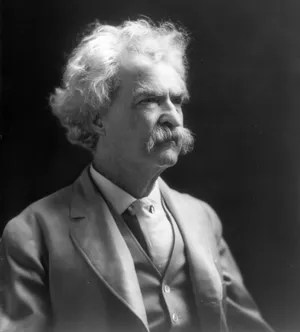
American literature legend Mark Twain is quoted as saying, “It is better to keep your mouth closed and let people think you are a fool than to open it and remove all doubt.”1 Twain, of course, used humor and satire to get his point across.
While I do not suggest you simply sit in the corner like a wallflower and never say anything, I do advocate for thinking before speaking to avoid putting your foot in your mouth.
Twain is referring to avoiding the habit of speaking quickly, off-the-cuff, before you know the facts, because that’s when you are more likely to misspeak. It is interesting, to say the least, that Twain would offer this advice, because he spoke loudly, early, and often throughout his life and many times had the unenviable task of trying to put those words back in his mouth.
That simply cannot be done. Once you have said something it is impossible to un-say it. It takes effort, repeated messaging, and most often an apology to walk back (as much as possible) something you said incorrectly. Even then, the words you misspoke can still surface much later and again raise questions about you, your character and motives.
The best way to avoid this situation is to say what you mean and construct your messages in a way that will resonate with your audiences. Nobody’s perfect, but not all is lost. Here, then, are some guidelines to help you be a better communicator:
- Be an active listener. Does your mind wander when listening to another person talk to you? Do you interrupt before others are finished talking? Are you really paying attention and listening to what is being said? If you are like most people, your answers to these questions are yes, yes, and no. The good news is you can correct these bad habits by becoming an active listener. That means you maintain eye contact with the other person, listen carefully, and ask questions whenever you are unsure about anything being said to you. This takes some conscious effort and practice, but you can become an active listener.
- Think before you speak. Be careful about what you say. It’s okay to pause and make sure you say what you intend to communicate – rather than speaking without proper thought and intent. This is especially true in tense or heated conversations where it is easy to let your emotions take over. Your power lies in remaining calm and communicating accurately.
- Express complete thoughts. People communicate every day in various formats, and it can become tiresome – especially when you have to say the same thing multiple times to different audiences. That is why you must actively ensure your message is complete and easy to understand. Similar to active listening, you must also actively express what you want to communicate.
- Anticipate and practice. When possible, think about the topic at hand and determine what you want to express. Practice does lead to better results. And when you are in an unexpected conversation, have a few things already in mind you can use to smoothly change the subject away from any hot topics.
- Be a cool, calm, and collected communicator. Certainly, be energetic in your communication. But when you are becoming agitated or annoyed during a conversation, tell yourself to remain cool, calm, and collected. This can be difficult to do, but once again it is important to be cognizant of your thoughts and feelings and then act accordingly. Slow your breathing and be sure to inhale deeply. Offer a change of subject, and if that fails, politely remove yourself from the interaction.
- It’s okay to admit when you do not have an answer. Rather than grasping for a response just to say something, admit you don’t have the answer to the question being asked of you. You can score points with others by saying you will get back to them when you’ve researched the topic.

- Complete the circuit. Effective communication is two-way – an interaction between the sender of the message and the receiver of the message. So be sure to complete the circuit. The best communication is when senders and receivers are both committed to active listening and complete messages. So, be sure to always complete the two-way communication circuit.
Interactions between people are based on trust and understanding. Following these communication suggestions will help establish you in that regard.
REMEMBER
◊ The Greek philosopher Aristotle said, “Character may almost be called the most effective means of persuasion.”2
◊ Here’s a great quote to help you remember to be an active listener. The Greek philosopher Epictetus said, “We have two ears and one mouth, so that we can listen twice as much as we speak.”3
◊ Visit www.davidajolley.com for additional blog posts, other interesting content, and updates on future book releases and appearances.
- Twain, Mark; Brainy Quote, https://www.brainyquote.com/authors/mark-twain-quotes ↩︎
- Aristotle, Brainy Quote; https://www.brainyquote.com/authors/aristotle-quotes ↩︎
- Epictetus, Brainy Quote; https://www.brainyquote.com/authors/epictetus-quotes ↩︎
 David A. Jolley - Homepage
Leave a comment